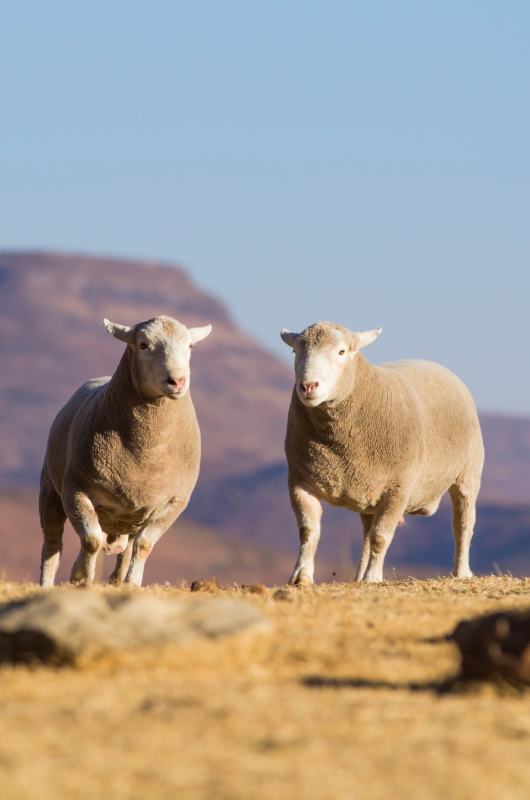
Dormer
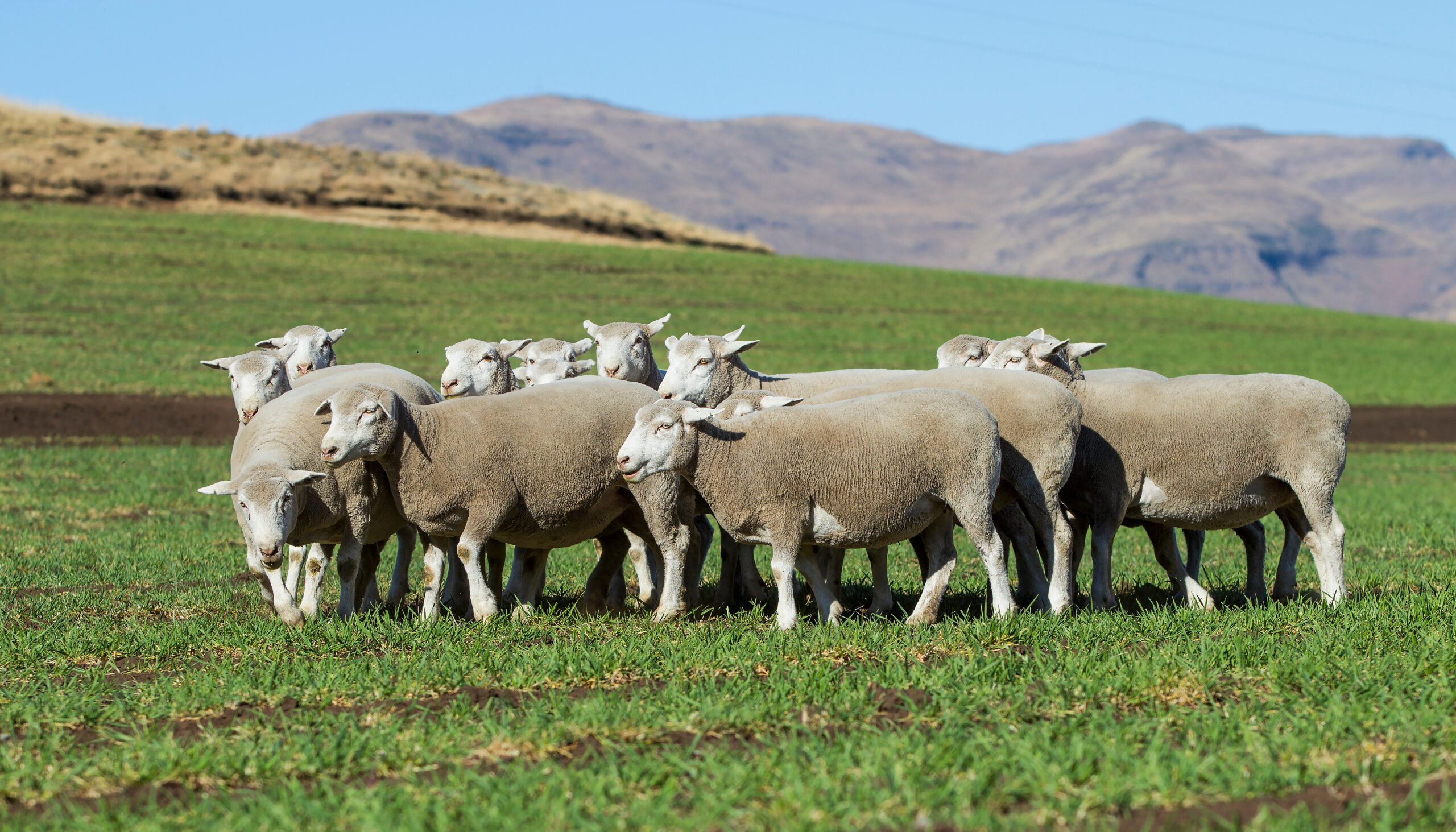
Origins, Strengths & Why It Excels
The Dormer is a white-wool sheep breed developed specifically for South African conditions, designed for efficient lamb production under local environments.
Originating from experiments at the Elsenburg Research Station in 1927, it resulted from crossing Dorset Horn rams with German Merino (now South African Mutton Merino) ewes. The goal was to create a breed that could produce superior slaughter lambs, thrive in cold, wet winter-rainfall regions, and outperform imported lambs in growth and carcass quality.
Through extensive trials involving breeds such as Border Leicester, Ryeland, South Down, Texel, and Corriedale, the Dorset Horn × Merino cross consistently showed superior daily weight gain, carcass conformation, and autumn lambing performance.
Today, the Dormer is prized for its meat production and functional efficiency—marked by high fertility, ease of lambing, strong maternal traits, quick re-conception, frequent multiples, and suitability for both pure and crossbreeding systems.

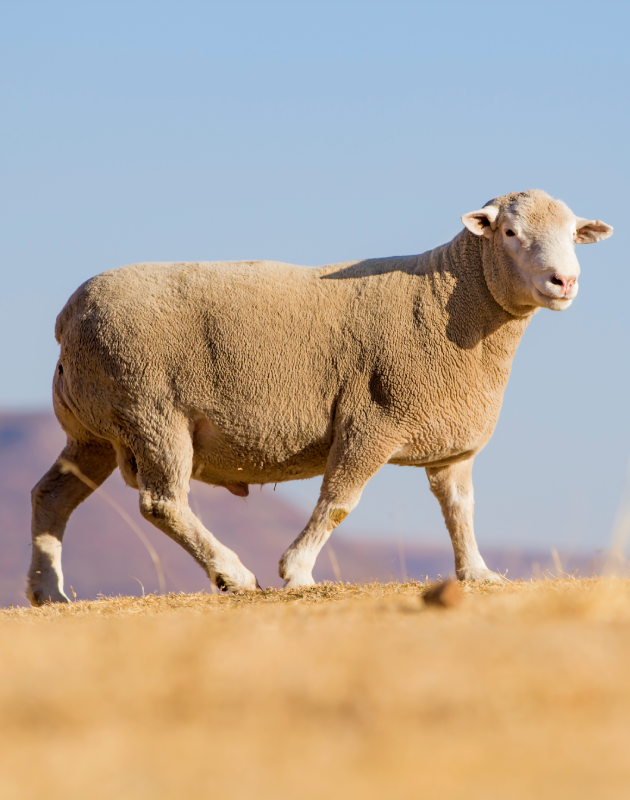
Key Strengths & Performance Highlights
Carcass Quality
Excellent yield for money; high dressing percentage; lambs market-ready early; strong performance in feedlots; good feed conversion.
Functional Efficiency
High fertility; easy lambing with small birth weights; excellent maternal qualities; ability to reconceive quickly; frequent multiples; long breeding season; effective for both pure-breeding and cross-breeding programs.
Versatility
Ideal for crossbreeding; early market lambs; consistent growth rates; solid carcass quality in varying environments; performs well under feedlot and pasture systems.
Fertility & Adaptability
Early maturity; high lambing and weaning percentages; adaptable across South Africa’s climates; strong mothering; good milk output; white wool free of kemp and coloured fibres.
Disease & Parasite Resistance
Dormers show strong resilience to common diseases and internal parasites, especially in the cold and wet winter rainfall zones. This resistance means fewer losses, lower treatment costs, and more consistent flock performance under challenging environmental conditions.
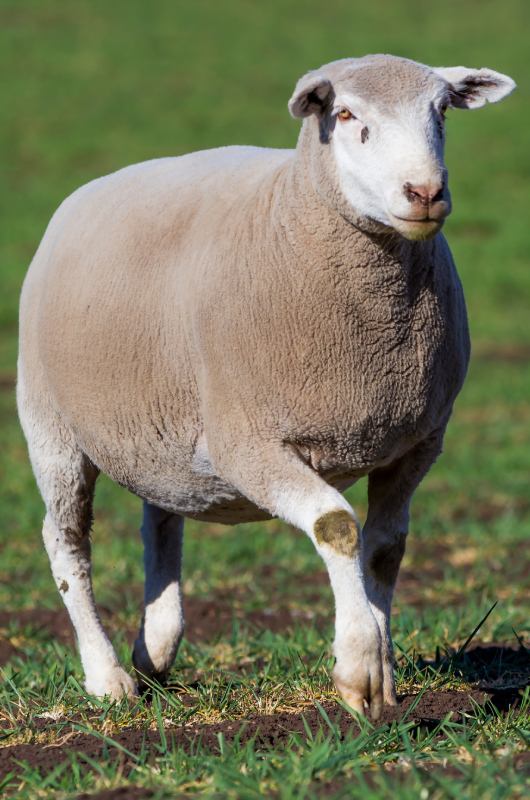
Standards & Breed Management
The Dormer breed has benefited from decades of structured selection and research, ensuring animals meet performance expectations in carcass quality, fertility, and adaptability.
Performance recording focuses on measurable production traits such as growth rate, feed conversion, and lambing efficiency—maintaining the Dormer’s status as a reliable and profitable breed for South African conditions.
Breeders continue to apply strict selection for fertility, structural soundness, and carcass quality, ensuring Dormers maintain their dual-purpose value (meat and wool) without compromising hardiness or adaptability.
Why It Matters for Farmers
The Dormer’s balanced combination of fertility, adaptability, and carcass quality makes it one of the most practical and profitable choices for South African sheep farmers.
Its proven ability to produce early market-ready lambs, thrive in diverse climates, and maintain strong maternal and reproductive performance means less management stress, lower losses, and better returns.
For both stud and commercial producers, Dormers consistently deliver — offering reliability, efficiency, and performance that translate directly into improved farm profitability and sustainability.