
Beefmaster
Origins, Strengths & Why It Excels
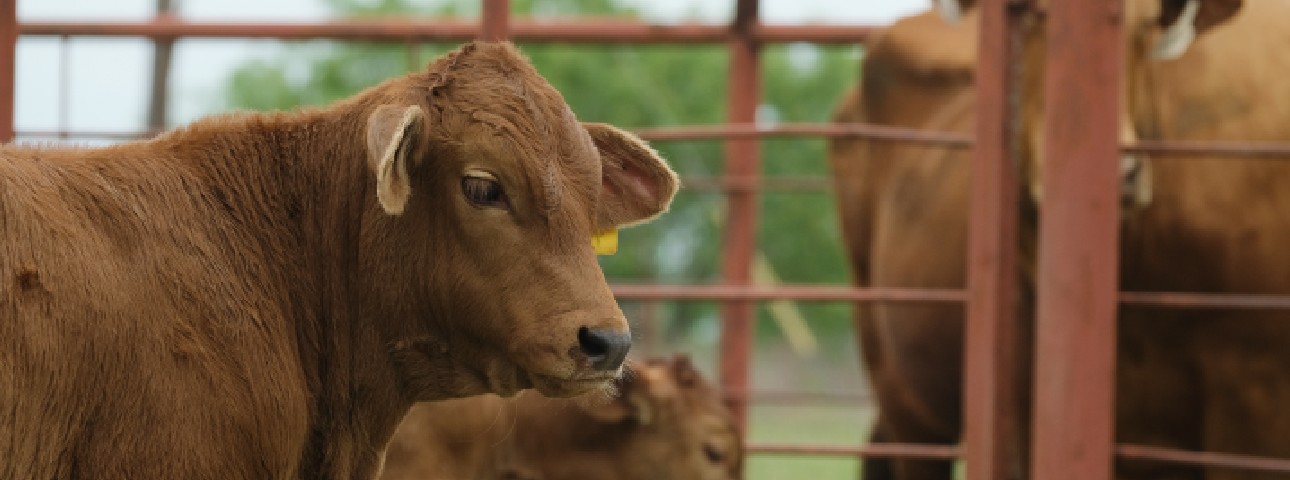
Beefmaster is a composite cattle breed built from approximately 50% Brahman, 25% Hereford, and 25% Shorthorn genetics.
Over many years, breeders in South Africa have selected this breed for the core functional traits: fertility, temperament, growth (weight gain), conformation, hardiness, and milk production.
What results is a breed well suited to harsh and varying South African environments—and one that has proven itself both in stud settings and in more practical farming operations.

Key Strengths & Performance Highlights
Growth & Weaning Performance
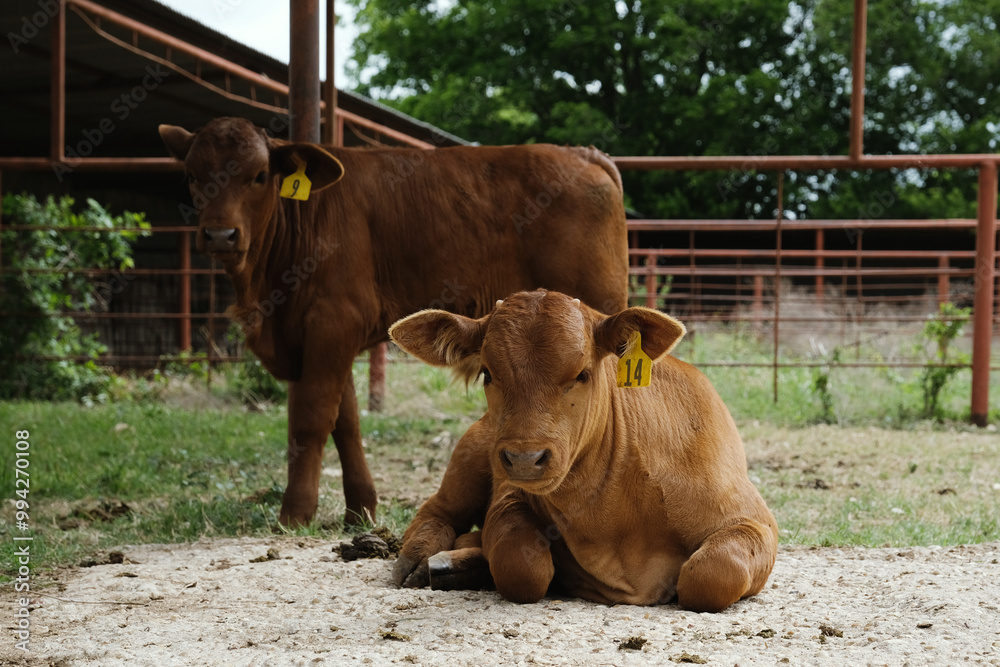
Average birth weights are ~35-36 kg; weaning weights around 236 kg; 12-month weights ~288 kg, with strong year-on-year consistency.
Fertility & Reproductive Efficiency
Average inter-calving period is about 393 days; cows usually calve for the first time by 31 months; excellent cow-to-calf ratios (high weaned weight relative to dam’s weight).
Adaptability & Hardiness
Beefmasters thrive in hot/dry, cold or variable climates; resistant to heat, tick challenges, drought stress; able to perform well in both feedlot and pasture systems.
Temperament & Maternal Traits
Known for a gentler temperament, easy handling, good mothering and high milk provision, which supports calf growth and survival.
Efficiency & Profitability
Due to performance testing, strict selection, and good feed conversion, Beefmasters tend to be profitable—especially when crossbred, where hybrid vigour boosts weaning weights and female performance.
Standards & Breed Management
The Beefmaster breed in South Africa is rigorously managed to uphold its reputation as a high-performance beef animal. All registered animals are subject to compulsory performance evaluation, ensuring that only those meeting strict benchmarks become part of the breeding pool. Key economically important traits—fertility, temperament, weight (growth), conformation, hardiness, and milk production—guide selection, in accordance with the original “Six Essentials” philosophy.
In practice, stud breeders must maintain precise records of birth weight, weaning weight, and yearling weight, as well as pedigree and parentage data. Animals not meeting minimum standards—such as heifers that don’t calve by acceptable age or bulls that fail performance tests—are culled from registration. Bulls approved for stud use are branded or marked (often with the Beefmaster “B” or “Rocking B”) to distinguish them.
Because these standards are enforced across the breed, Beefmasters uniformly exhibit desirable functional traits. This consistency underpins confidence in the breed’s performance across varying production environments.
Why It Matters for Farmers
For farmers, the strict standards and breed management of Beefmaster translate into tangible advantages in herd productivity, profitability, and resilience. The breed’s calibrated selection means that every animal you purchase already carries proven traits—lower risk of poor performers, better consistency, and reduced culling losses.
Beefmasters also unlock strong gains via crossbreeding. Thanks to their composite genetics and retention of heterosis, the offspring often inherit improved fertility, growth, and maternal traits. In fact, using Beefmaster bulls in crossbreeding programs can result in calves that are easier to birth yet heavier at weaning, and dams with enhanced reproductive fitness.
Moreover, with standards in place for growth and reproduction traits, farmers can more reliably predict outcomes (weaning mass, intercalving intervals, cow productivity) and reduce management risk. Cattle that already meet these benchmarks require less guesswork and fewer corrective interventions.
In environments with variable feed, climate or disease pressures, the hardiness bred into Beefmaster cattle—again enforced by the standards—provides resilience. This means fewer losses, lower input costs, and more stable returns even during tougher seasons.
In short: the breed management ensures that when a farmer invests in Beefmaster genetics, they acquire established performance rather than uncertainty—and that promise of consistency is what makes Beefmaster a powerful tool in building profitable, reliable herds.